My Adopted Country

On this July 4th, I have been reflecting on the spiritual meaning of being an immigrant.
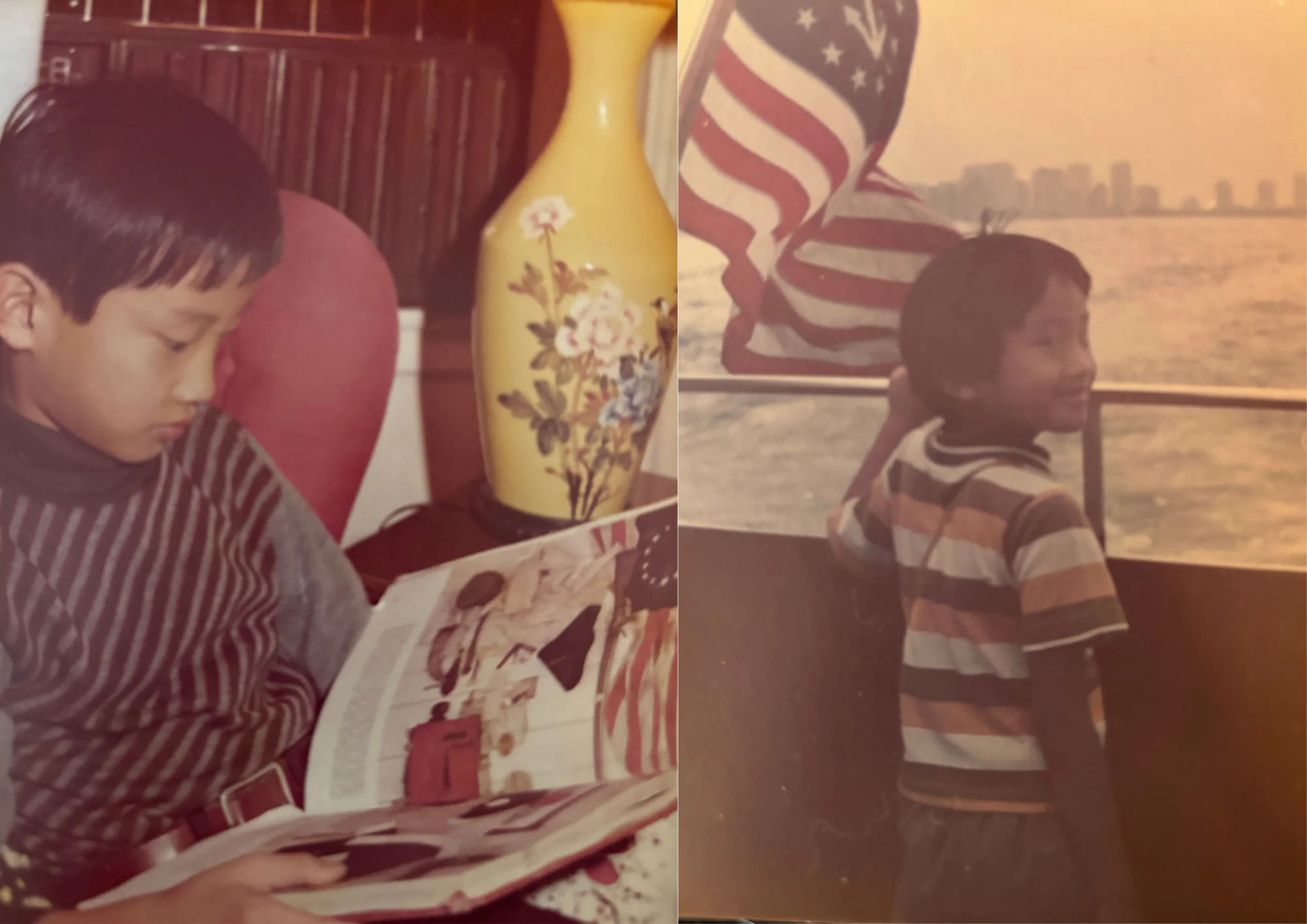
My family immigrated to Chicago from Taiwan when I was three, so I have become thoroughly American in loyalty, language, culture, education, citizenship, and most other aspects of identity. I also remember the first time that I discovered that there would always be a limit to feeling like I really belong to this country. As a highly ambitious boy, I imagined my grown-up self striding into a ballroom and being saluted by the tune of “Hail, to the Chief” — until I was crushed to discover Article II, Section 1, Clause 5 of the Constitution which dictates a president can only be a natural-born citizen.
To fully belong is the visceral desire of the immigrant. This is why the phrase “my adopted country” has such resonance for people like us. “Adoption” conveys our longing to not just be permitted to “live under the roof” of a country as a resident, but to become its true son or daughter.
Adoption is a metaphor that Scripture often uses to depict how we are brought into the family of God (e.g. Rom. 8-15-23; Rom. 9:4; Gal 4:4-7; Eph 1:5). In the Biblical worldview, this ultimate spiritual adoption is often conveyed by the image of adoption into a nation, specifically Israel. Salvation, according to God, involves people of the Gentile “nations” becoming “grafted in” to Israel. (Rom. 11:17-24).
The immigrant experience is thus meant to convey important spiritual truths to God’s people. For example, God often reminds the people of Israel that they were “resident aliens” in Egypt, and that this aspect of their history sheds light on how they are to be faithful to God, including how a nation of former immigrants must now welcome its own newcomers (i.e. Exodus 22:21; Lev. 19:33-34).
I think the deepest spiritual truths conveyed by the immigrant narrative revolve around that visceral desire to belong – and the accompanying anxious question, “But do I…really?”
As a nerdy child, I expressed this desire by becoming absolutely absorbed in American history, especially American military history. By age nine, I had exhausted my public library’s entire collection of children’s books on this topic, and was moving into the adult section for fresh content. Looking back, I think I was intent on ingesting the story of this nation as my story. Indeed, these books fueled my imagination such that I would spend hours by myself in the living room, wielding an old baseball bat that doubled as my musket on the front lines of Gettysburg or as my machine gun on the beaches of Normandy. It was me defending the Union; it was me at the spearpoint of America’s Greatest Generation.
Yet, as much as I imagined myself as an American willing to shed my blood for my country, there were also childhood experiences that asked, “But do I really belong?” Experiences like being taunted on the playground by white kids making slanty eyes at me. Experiences like entering my classroom and hearing someone mockingly salute me as, “Ching Chong Chang.”
As my knowledge of American history expanded beyond the military realm, I grew in my awareness of the painfully ambivalent ways our country has incorporated immigrants throughout its history. Many of our Founding Fathers — only recent descendants of immigrants themselves — imported Africans as slaves. My state of California is the most racially pluralistic state in our nation — and it got that way to a great extent by exploiting Chinese and Mexican laborers throughout its history.
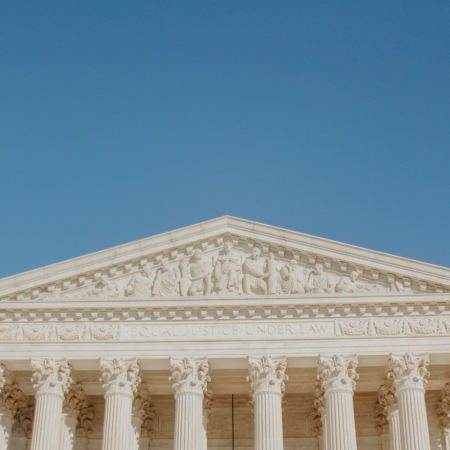
I still would choose to belong to America more than any other country. But its willingness to adopt newcomers has always been incomplete. And today’s politics should remind us that even its past welcome is never fully assured, as evidenced by three Supreme Court justices just yesterday voting to overturn the previously rock-solid assurance of birthright citizenship (thankfully, there were six who upheld it).
Ironically, this insecurity may be the most important way that the immigrant story points all Christians to God. My uncertainty around “But do I really belong?” is (to use a favorite Silicon Valley phrase) a feature and not a bug. The immigrant experience sheds light on the truth that every humanly created nation is affected by the Fall. Therefore, any national adoption will image God only partially at its best; it will certainly fail horribly at its worst. But the failure is part of the point. The cracked image reminds us that it is only an image, and not the Reality.
Today, it seems that the statement “I don’t recognize this country any more” could emerge from any demographic, from any point on the political spectrum. Might this widespread sense of alienation actually point to a necessary spiritual truth? We Christians ought to ask every country in which we reside: “But do I fully belong to you?” And the Biblical answer is: “No, not really.” This is the answer for every one of us, the adopted and native born alike. The former may long for national belonging, the latter may assume it. Both will be disappointed.
Which is why America — or any historical nation — can never serve as our final destination or our permanent home. Spiritually, we are all immigrants, all seeking our place of full and final belonging. Our story does not come to a satisfying conclusion until we arrive at a better country. And our entrance there will be saluted by truly glorious songs.
The author of Hebrews expressed this truth the best:
All of these died in faith without having received the promises, but from a distance they saw and greeted them. They confessed that they were strangers and foreigners on the earth, for people who speak in this way make it clear that they are seeking a homeland. If they had been thinking of the land that they had left behind, they would have had opportunity to return. But as it is, they desire a better country, that is, a heavenly one. Therefore God is not ashamed to be called their God; indeed, he has prepared a city for them. (Hebrews 11:13–16, NRSV)
May you have a blessed Fourth of July. May God bless America. And may we all “make it clear that we are seeking a homeland.”


Join us Around the Good Faith Campfire
Get the latest insights and updates delivered straight to your inbox weekly.