While We Weren’t Looking: David French on Ukraine

The Ukraine war has fallen off our front pages. The world is reorganizing anyway. Here’s the catch-up, and a few prayers worth carrying into the week.
For the last six months, Curtis mentioned that he has scanned the Wall Street Journal headlines every morning. AI. Domestic politics. Supreme Court rulings. Economic data. He can count on one hand the times the war in Ukraine has been the lead story.
That’s a problem. In those same six months, something the size of a generation has been quietly rearranging itself.
We just sat down with David French, Founding Friend of Good Faith and our regular guide on geopolitics and the life of faith, to make sense of where things actually stand. The conversation was clarifying. Also a little disorienting. The version of the world many of us grew up assuming was permanent? It isn’t. And the place where that’s most visibly true right now is Ukraine.
If you’ve drifted from this story, and most of us have, here’s the catch-up.
A year ago, the picture looked grim. Russia was a steamroller. Western support was thinning. American direct aid had plummeted. The European defense industrial base wasn’t ready. Most analysts assumed Ukraine was being slowly ground down.
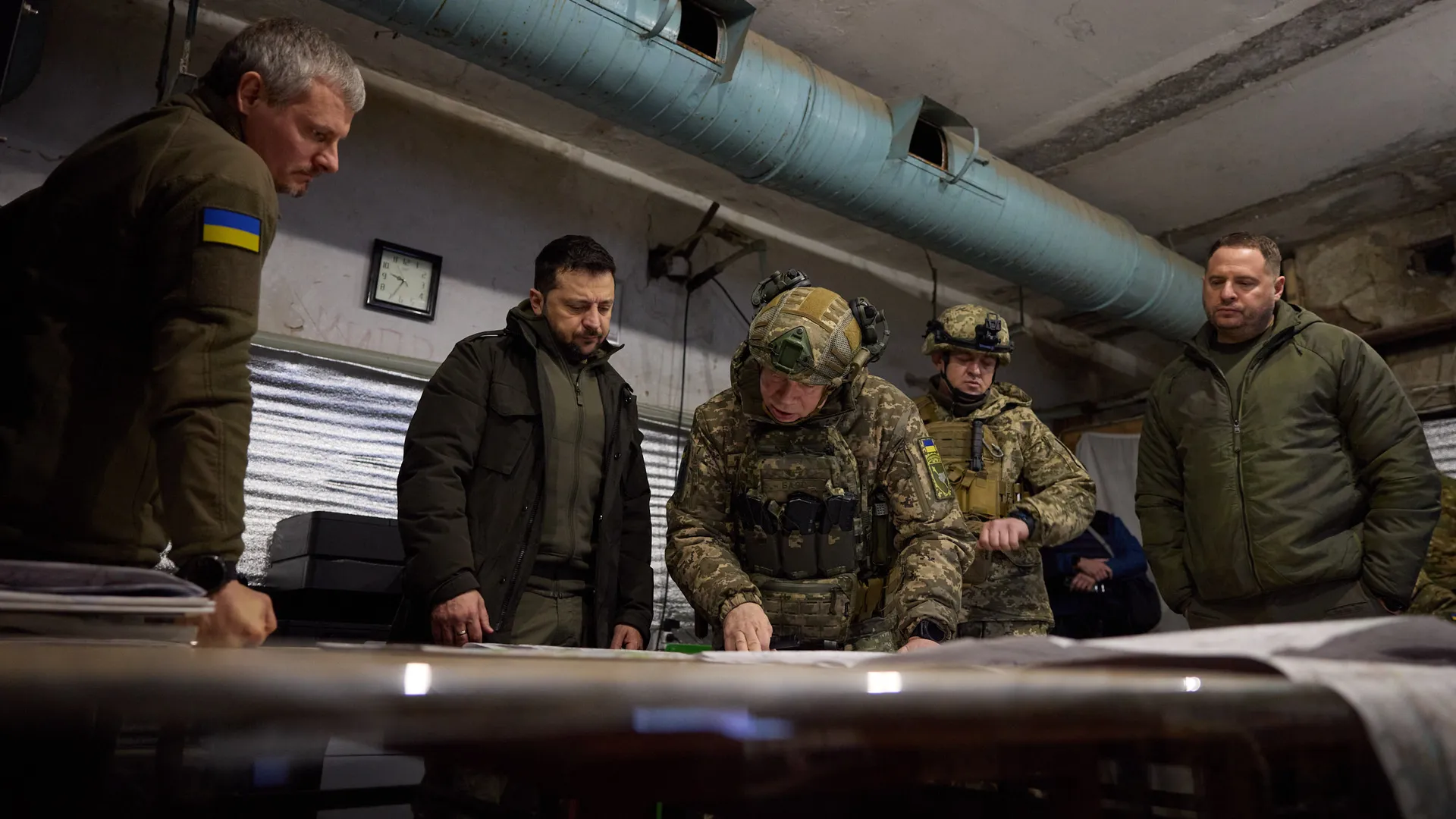
Then in February of this year, for the first time since the earliest months of the war, Ukraine regained more ground than it lost. Even in months when Russia advances slightly, the losses it absorbs aren’t sustainable. Ukraine is producing hundreds of thousands of drones. New cruise missiles. The Ukrainian strike campaign on Russia’s economy is escalating.
David’s read: Putin now faces a real choice. He can announce a full national mobilization, which would create massive problems and isn’t the panacea he hopes, or he can accept that the current course is slowly wrecking his own country. There’s a real argument the war has become more sustainable for Ukraine than for Russia.
That’s a sentence almost no one would have written 18 months ago.
Germany is planning a €1 trillion defense expansion. The goal: by 2039, the 100-year anniversary of the invasion of Poland, to field the most powerful conventional army in Europe.
France is expanding its nuclear arsenal and extending its nuclear umbrella to allies. Canada is massively increasing defense spending and pledging to wean itself off American weapons. The UK and Japan are in the middle of major buildups. Mark Carney has openly described a strategic framework in which middle powers collectively replace what America used to be.
Some Americans hear this and think: good, we don’t want to be doing all this anymore. That misses the point. These countries aren’t strengthening our alliance. They’re building structures that don’t depend on us, because they’ve concluded they can’t.
Every empty seat at the table eventually gets occupied. Right now, the most opportunistic and resourceful actor in the world is China, which is happily moving into the spaces America used to hold. Russia, despite its battlefield problems, is working the same angle.
This is the bill we’re paying. We’ve submitted a $1.5 trillion defense budget, historic deficit territory, at the same moment our actual global influence is contracting. We’re not getting a peace dividend. As David put it, we’re getting a self-inflicted injury.
A lot of Americans assume we’ll elect someone different, the alliances will snap back, things will return to normal. They won’t.
Once you’ve reelected a leader who has cast doubt on American alliances, threatened to invade an ally, and questioned the existence of NATO, you’re no longer the country whose words can be taken at face value. Defense planners abroad work on 25- to 30-year horizons. They don’t plan around what one party might do in 2028. They plan around what the American people, structurally, are willing to do.
The verdict, for now: don’t count on us.
In January 2022, Volodymyr Zelensky had videos of himself in drag, dancing to Beyoncé’s Single Ladies. A comedian and entertainer. Pentagon analysts told David, on the eve of the invasion, that they weren’t sure he was up for what was coming.
Then Russian missiles started falling. Rumors spread that Zelensky had fled. Soldiers in the field began wondering if their leadership had checked out. And he stepped into the square in Kyiv, with assassins reportedly hunting him, and filmed the line that may end up in textbooks: I’m still here. We don’t need a ride. We need ammunition.
He now leads what David calls one of only two militaries on earth fully up to speed on the modern way of war, and the more innovative of the two. He has demonstrated something rare in our era: raw heroism paired with real shrewdness. Wise as a serpent, brave as a lion. That combination didn’t just happen. It emerged from a place no one expected.
We’ll come back to that.
David’s number, said almost in passing: roughly 1.2 million Russians killed or wounded. Hundreds of thousands of Ukrainians. Civilian populations displaced and traumatized at a scale most of us cannot picture. And we are, at most, in the middle of this story.
Somewhere in the middle of the conversation, Curtis pulled everything back to Jesus’s question: who is my neighbor?
It’s a strange thing to admit, but for a lot of us who follow Jesus in America, the answer has been quietly shrinking. Our tribe. Our zip code. Our denomination. Our political coalition. The people who think and vote like us. The neighborhood, in our practice, has gotten smaller, even as the actual world has become more connected and more visibly suffering.
The founding intuition of the church was the opposite. From the first generation, the body of Christ has been a body of many nations, many languages, many people. What happens to other people matters. Even when they live far away. Even when their pain doesn’t surface in our feed.
What we're reading, recommending, and wrestling with—all in Good Faith.
David said it as plainly as he could on the show: the issue set for many evangelicals has narrowed to two or three things. Meanwhile, hundreds of thousands of people are dying in the Donbas. “It’s hard to think of something more important in the world right now.”
A hundred years from now, our great-grandchildren won’t be asking what we thought of the next Supreme Court ruling. They’ll ask what we paid attention to. What we prayed for. What we gave. Who we grieved. While one of the largest land wars since 1945 was happening in real time, and a fragile global order was being rebuilt around our country instead of with it.
There’s also a quieter Christian thread running through this story. Zelensky is exactly the kind of figure scripture should have primed us to expect. The stone the builders rejected. The unexpected savior of an unlikely people. We don’t need to make him into something he isn’t to notice the pattern: God’s people, again and again, have been called to recognize courage and providence in places the world overlooked. We should be the first ones paying attention. Often we’re the last.
If you’ve drifted from this story, one way back in is to pray. It’s not a substitute for paying attention. It’s a way of starting:
The full conversation with David is up wherever you get your podcasts. Worth a long walk and a quiet hour after.
The Good Faith team

Get the latest insights and updates delivered straight to your inbox weekly.