Truth and Conspiracies

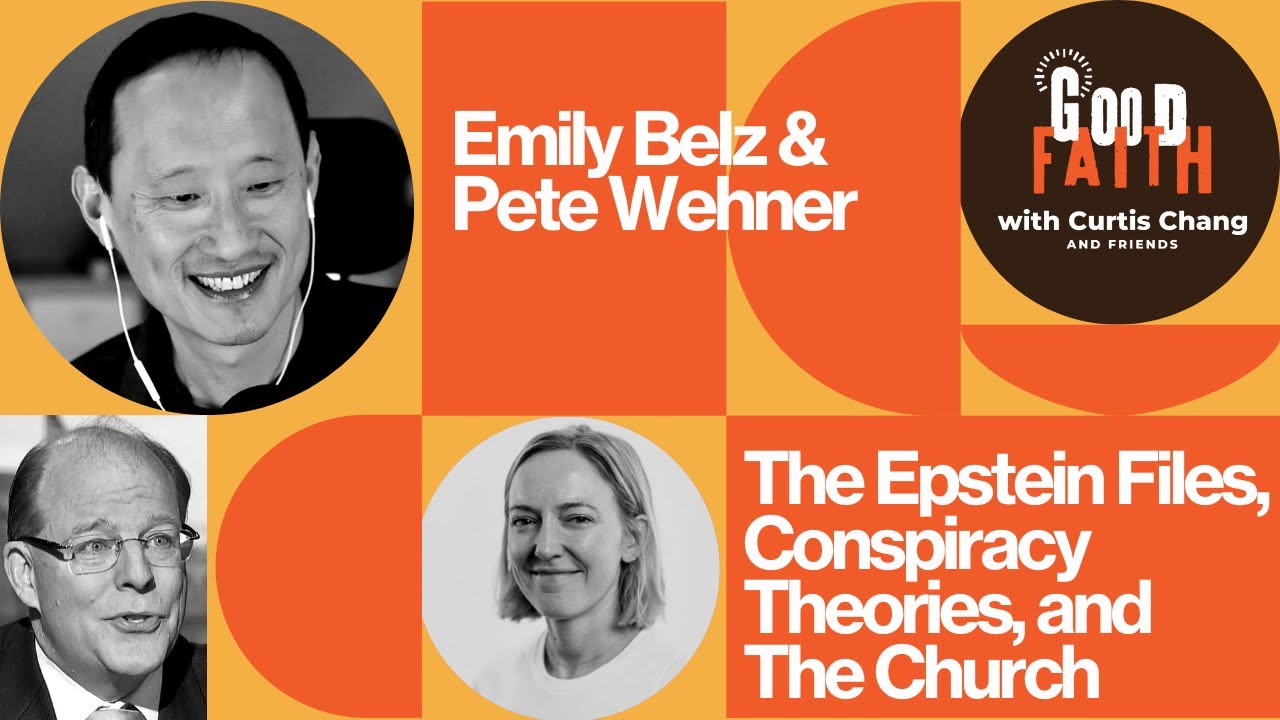
In today’s episode of the Good Faith podcast, Curtis Chang welcomes Pete Wehner, a columnist for The Atlantic, and Emily Belz, writer for Christianity Today. Their discussion follows the rise of conspiracy theories in American politics, the ties between faith communities and misinformation, and how much of these issues stem from a lingering cultural distrust in U.S. institutions. Belz and Wehner provide insights into how fringe conspiracies (especially from platforms like QAnon) have become alarmingly mainstream, but they also provide a glimpse of hope and direction for believers trying to navigate politics and faith.
At its core, QAnon pushes the idea that a secret, elite group of high-profile leaders in government and media are engaged in human trafficking. In the recent past, QAnon has heavily emphasized Donald Trump as a kind of messianic figure chosen to expose and destroy it. What started as a fringe internet conspiracy has now been embraced and promoted by a disturbing number of mainstream figures, with some MAGA Republicans either platforming or subtly nodding to QAnon narratives.
So how did we get here?
As Pete Wehner points out, the groundwork for this didn’t begin with Trump. While Trump has skillfully leveraged conspiracy thinking to energize his base, the deeper issue stems from a decades-long erosion of trust in institutions in the U.S.. Since the mid-1900s, many Americans have come to view the government not only as incompetent and dishonest, but often malicious.
Conspiracies like QAnon offer more than just alternative narratives. As both Belz and Wehner note, they provide belonging, a sense of identity, and even a purpose. In an age marked by loneliness and disconnection, conspiracy communities provide clarity, camaraderie, and the thrill of “secret knowledge.” It’s not just politics: at the intersection of the MAGA movement and Christianity, it’s a spiritual battle of light versus darkness.
Interestingly, some of the deepest tensions between the MAGA movement and QAnon have come not from fact-checking or myth-debunking, but from within the movement itself, with the Jeffrey Epstein case causing the most prominent division. Where Trump allies once fanned the flames, they have pivoted to distance themselves and attempt to divert public interest, at least momentarily creating fractures in Trump’s usually unwavering MAGA base. Although this could signal a rift between Trump and his followers, Wehner is skeptical of its lasting impact, suggesting the rupture has already been patched. Still, he warns, even small decreases in turnout could have significant political effects.
The episode also tackles another uncomfortable question: Why are American Christians seemingly more prone to believing in these conspiracies?
The answer may lie in the cultural DNA of evangelicalism. With a strong American emphasis on individualism, historical tensions between faith and science, and belief in spiritual powers, many Christians are already primed to accept grand narratives of spiritual warfare, even if it means denying empirical evidence. When politics starts sounding like Scripture – good vs. evil, principalities and powers – the step into conspiracy isn’t a far stretch. Although there has been a huge breach of trust in the institutions of government, media, and even the church, Belz and Wehner hope that trust can be rebuilt.
As Belz explains it, “people are being discipled by the internet and not their pastors.” The solution is not shaming or fact-checking (although accountability through church discipline may be necessary) but building personal connection. Conspiracy communities thrive in the desert of isolation and loneliness, but both pastors and congregants can help in rebuilding trust in churches through commitment to relationships and a genuine love for neighbor.
Ultimately, the conversation in this episode is vital towards understanding what the relationships are between QAnon and the Church, and how they connect to Donald Trump conspiracy theories: this isn’t a sudden phenomenon, but the result of a gathering storm. Unless we can grapple honestly with its spiritual, cultural, and political roots, QAnon and movements like it will continue to thrive and cause damage – across the board, but perhaps especially in faith communities.
This excerpt has been edited for length and clarity.
Emily Belz: I think that Christians have more trust in their control over the content they’re consuming on the internet than they really have, and so we think ‘well, I’m not going to consume bad movies, I’m not going to consume bad books,’ but when it comes to your algorithm, you’re not really controlling what’s being fed to you. I think people do find themselves down these wormholes that they’re not expecting and they might not know where some of this content is coming from, which is why I think it’s so important to understand QAnon, to understand that this narrative comes from some really dark parts of the internet. So if you see a post accusing, say, World Vision of trafficking, that’s not coming from nowhere, that’s coming from this idea that’s been boiling up on the internet for a long time. I think the algorithm is acting on people and they’re not acting on the algorithm.
Curtis Chang: That’s such an important point because that in some ways explains why we have this sort of befuddlement between the various parties. We’re actually consuming different news sources. We have different pictures of reality so that we can’t even talk to one another, and that’s why each side feels the other is ludicrous in holding on to some basic reality.
Pete Wehner: It’d be interesting to me to do an examination of whether Christian fundamentalists in particular, but evangelicals as well, are particularly prone to conspiracy theories by certain things that are inherent within the faith itself.
Now, I’m not saying the faith is itself based on conspiracy theories. I’m a person of the Christian faith. What I mean by that is, for example, there is a historic tension between faith and science. The people who are most likely to believe that COVID vaccines were part of a government conspiracy … Christians were more prone to that than non-Christians were, and I think that played into a certain skepticism of science, which has been part of Christianity for much of its history. People like Francis Collins and Biologos have done a lot to try and show that science and faith are compatible. But that is a certain reflex that exists. Also within Christianity, there’s a belief in miracles, principalities, powers, dark forces that exist, and are talked about within Scripture.

Join us Around the Good Faith Campfire
Get the latest insights and updates delivered straight to your inbox weekly.